Office Address
Plots 17/18/ FRCN Layout, Kutunku, Gwagwalada Abuja, Nigeria.
Phone Number
+234 811 815 0111
+44 7763 956 786
Email Address
info@apdcgroup.org
Plots 17/18/ FRCN Layout, Kutunku, Gwagwalada Abuja, Nigeria.
+234 811 815 0111
+44 7763 956 786
info@apdcgroup.org


 by APDC Group
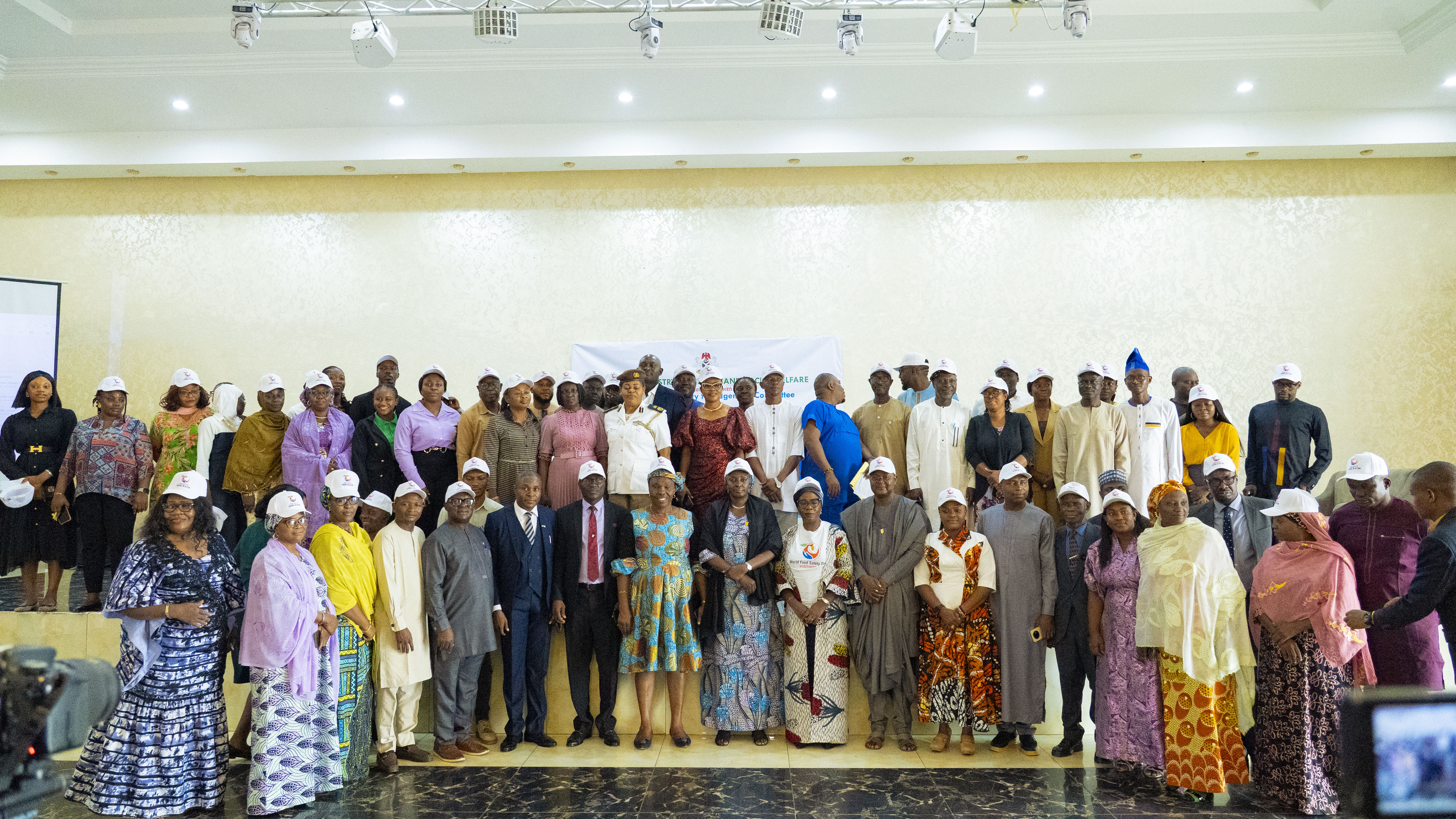
 June 13th, 2025, - Exclusive Serene Hotel & Suites, Wuye. - To round up a week-long chain of activities, the Federal Ministry of Health and Social Welfare, in collaboration with the National Food Safety Management Committee, the Africa Projects Development Centre (APDC), and other global stakeholders in food safety, nutrition, and health, held a symposium today to commemorate World Food Safety Day in Abuja, Nigeria.
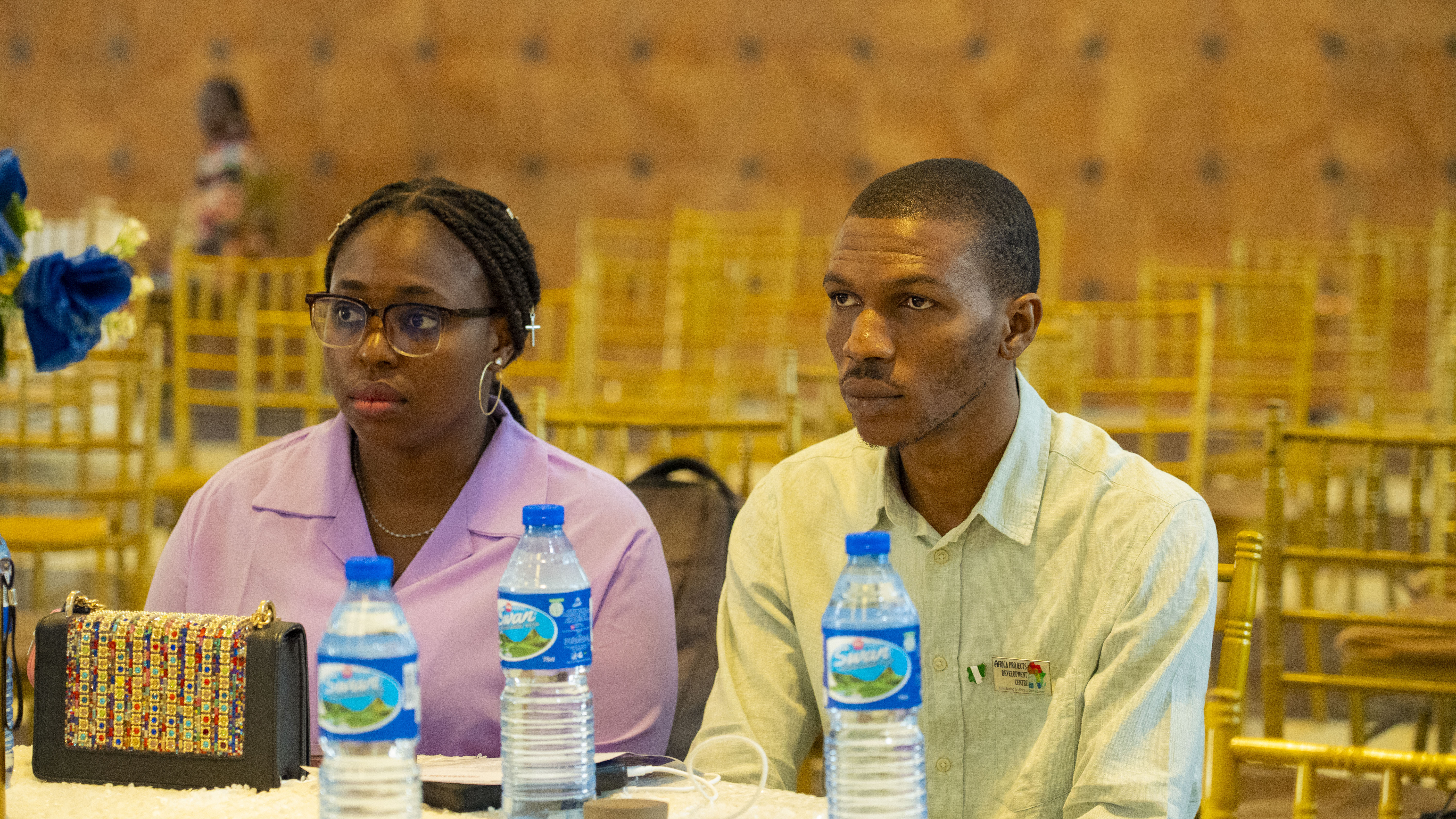
Representing the management of APDC at the symposium was a team led by Mr. Maaruf Yakub, the Centre's Director of Programmes, Policy and Partnerships, and Ms. Ifeoma Umeania, the Director of Administrative Services, alongside members of the senior management team and other colleagues.

Nigeria faces an estimated 33,000 deaths annually from foodborne diseases and 173 million cases of diarrhea caused by foodborne illness, resulting in treatment costs of approximately USD 1.7 billion according to the World Health Organization. Nigeria remains one of the most affected countries on the African continent, where the WHO estimates about 91 million cases of foodborne illness and 137,000 deaths occur annually.
Addressing this critical challenge, Ms.Daju Kachollom, Permanent Secretary of the Ministry of Health and Social Welfare, emphasized in her opening address that "scientific information and data are vital for public health. We are rolling out digital platforms and empowering lives. Our strategy is to anticipate challenges and risks and to make sure our food remains a source of nourishment and is safe."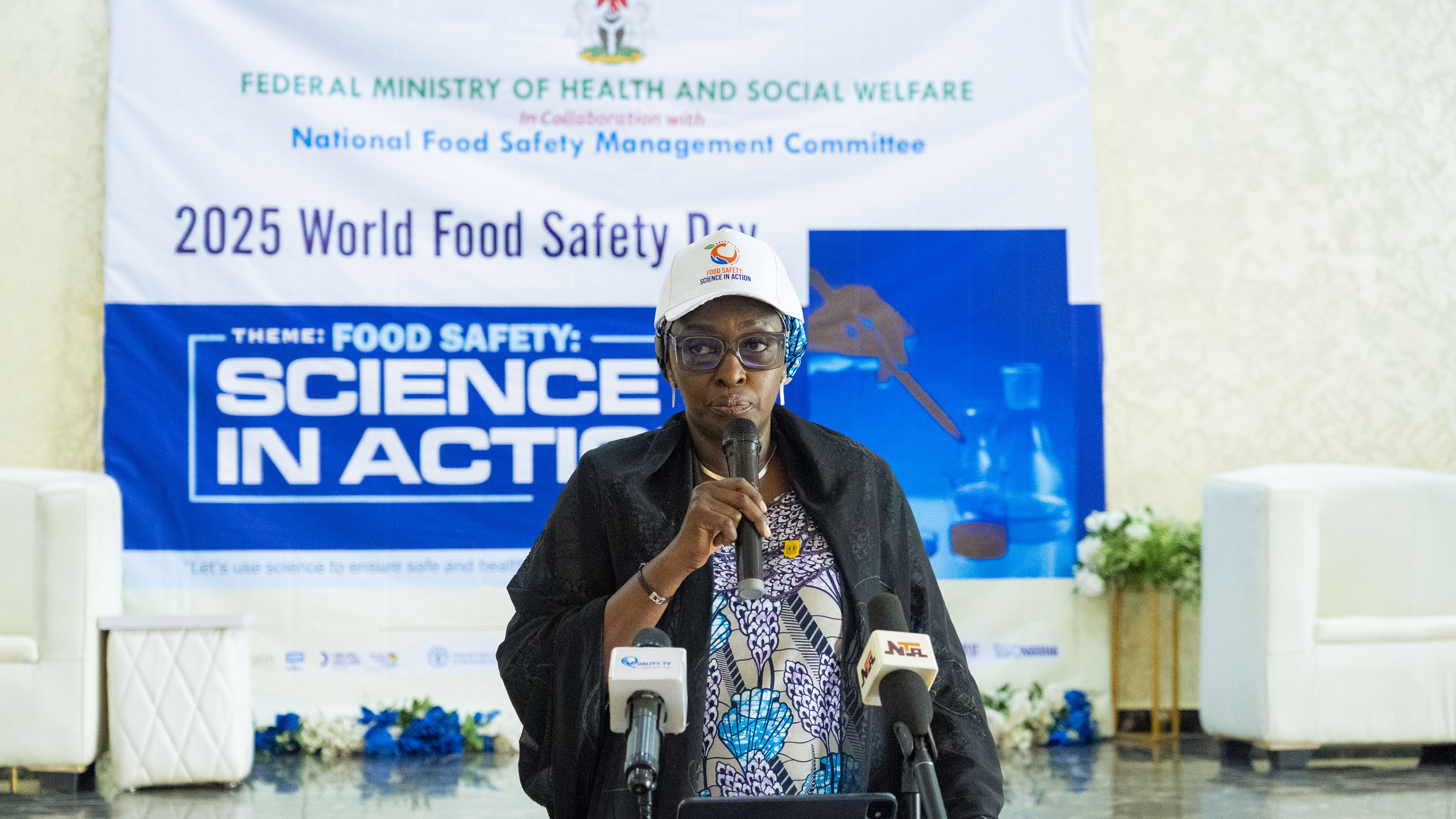
She continued, "The visible impact of our guidelines for the food industry is already unfolding and has elevated the safety and hygiene standards of food in the country. We plan a further science-based approach to tackle future challenges with confidence. We aim to establish new benchmarks to improve food safety."
Ms. Kachollom extended heartfelt thanks to development partners and farmers who continue to be the backbone of the food system, as well as policy drivers. She charged food systems, researchers, academic institutions, and the food industry to bring their best in contributing to food safety.
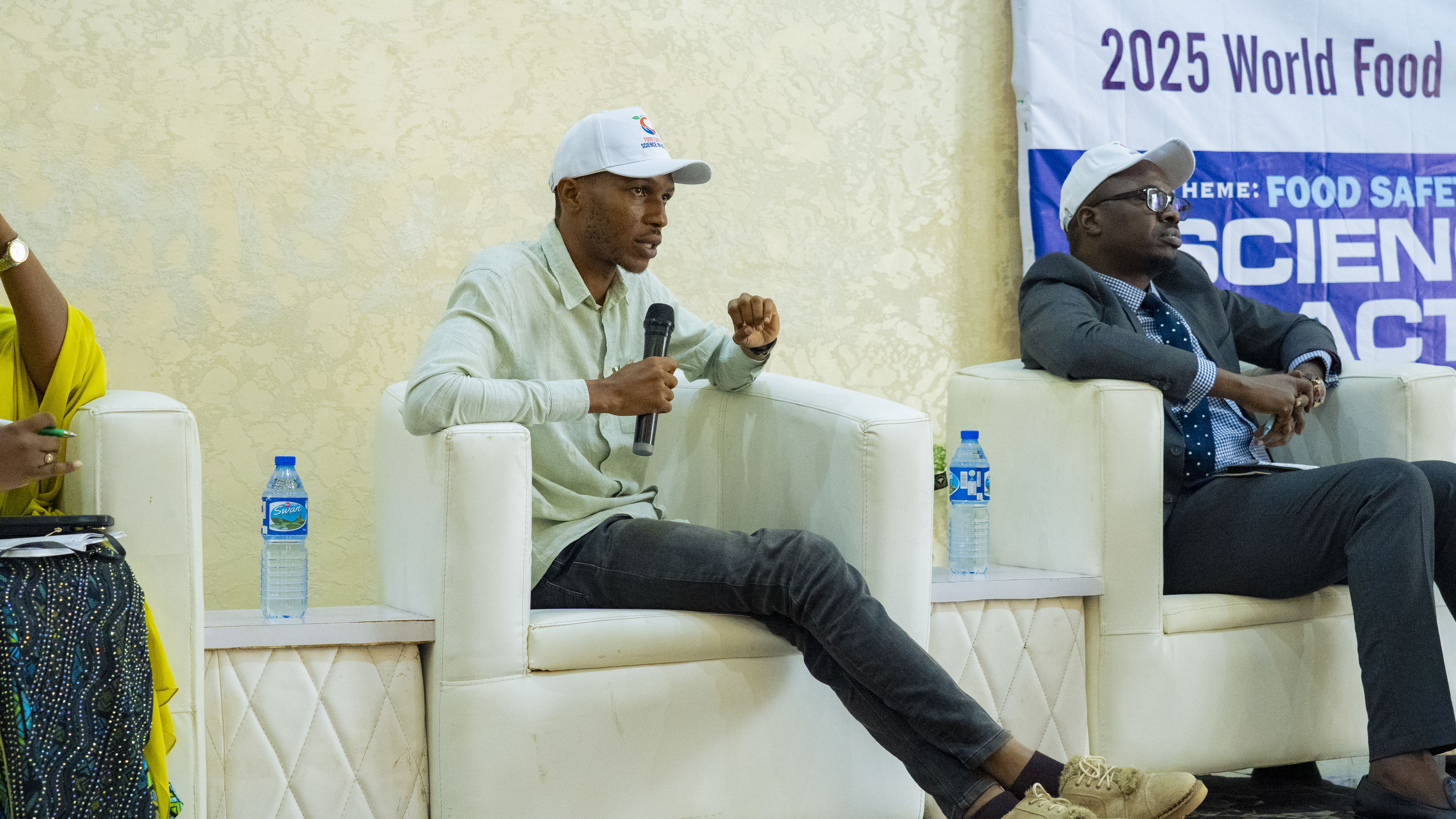
The symposium featured a panel discussion on the theme "Science in Action: From Table to Farm," where stakeholders discussed a range of topics, including how integrated research and scientific knowledge prevent foodborne diseases, building strong, cohesive partnerships for scientific advancement in safe food processing, and regulatory frameworks and enforcement.
Representing APDC on the panel and speaking on calling youth and community members to action on the adoption of safe food practices, Mr. Maaruf Yakub responded to questions about their initiatives:
"We have what we call the Nutripreneur Programme, which focuses on food hygiene using diversified preservative systems and methods in producing and handling food. Under this program, we've been able to bring entrepreneurship and sensitization under one umbrella, helping participants understand how they can market their foods and diversify food systems.


"A lot of people eat out at least once a month, and there's a high potential that the food may not be safe. What we're doing is helping food handlers see how they can implement the highest standards. There are no restaurants that specifically cater to customers with particular ailments, so this program helps food producers bring in value propositions that improve the value of their food to the general public. This initiative has been implemented in several hospitality organizations across the FCT and the country."
The symposium concluded with a clear mandate: food safety is a shared responsibility requiring collective action. With initiatives like APDC's Nutripreneur Programme leading the way, stakeholders reaffirmed their commitment to building a safer food system that protects lives and reduces Nigeria's burden of foodborne diseases.